My Beer Journey: Marie-Emmanuelle Berdah
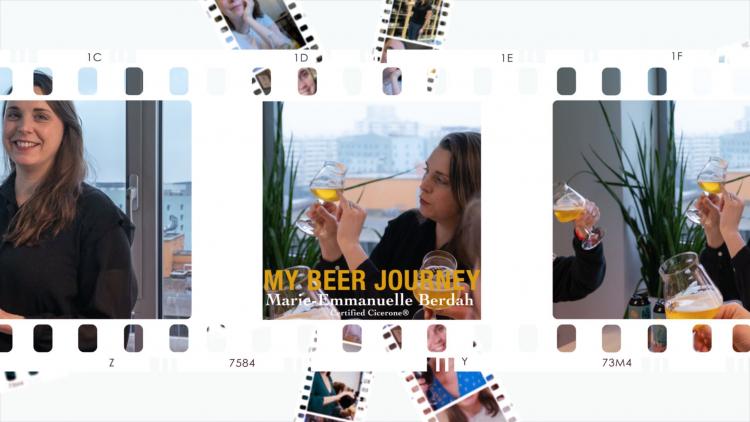
We recently caught up with Marie-Emmanuelle Berdah, a Certified Cicerone®, BJCP judge, beer educator, and founder of Craftology in France. Her path into beer started with curiosity, shaped by travel, and has since evolved into a full-time role teaching others about beer in classrooms and training programs across the country.
Here are some highlights from our conversation with Marie.
My first real connection to beer happened in London.
I lived near a bar called Mother Kelly’s that had a great craft selection. I didn’t know much at the time. I was mostly drinking pale ales, but it made me curious. I started looking for craft beer in shops and supermarkets. Later, I spent almost a year traveling through South America, and in every city, I would search for craft beer. I wasn’t chasing the mainstream lagers from big companies. I was looking for breweries and taprooms that reflected the local culture. That’s when I started realizing beer could be much more than what most of us grow up with.
I’m French, so we learn about wine early. But beer? That was something you drank at a barbecue without thinking much about it. During that time, someone brought a bottle of Sierra Nevada Pale Ale to a barbecue in the U.S., and I remember thinking, “That’s actually good beer.” At the time, I had no idea how important that beer was to the craft movement. Now that I teach about it, I can see how big of a moment that really was.
I started like many people, by brewing at home.
At first, I thought I’d open my own brewery. But after doing internships and working in production, I realized brewing wasn’t for me. I enjoyed it, but I wasn’t patient enough to wait for results or troubleshoot at that pace. I wanted something more dynamic.
I eventually took a job at one of the largest bottle shops and beer bars in the area where I live. Around that same time, France launched its first diploma focused on beer education, based in Paris. It’s called Zythology, a program that blends brewing and beer service knowledge. I signed up, and then COVID hit. Everything shut down.
That gave me time to focus. I studied the BJCP guidelines on my own, passed the Certified Beer Server exam during lockdown, and then completed the zythology diploma. I kept going. I passed the Certified Cicerone® exam in 2021 or 2022, then earned my BJCP certification in 2023, and recently completed WSET Level 2 in Beer.
Now I teach. My company is called Craftology, and I mostly work with schools and institutions that want to train future professionals. I teach all aspects of beer, from ingredients and brewing to market comparisons, beer styles, tasting, and history.
Beer education in France is slowly growing.
There’s more interest now, and more programs are launching. WSET has arrived in France, and people are starting to see beer as something worth studying. But it’s still a challenge. The wine industry is strong, and there’s a lot of pressure from that side. Beer is still seen as simple, but once people start learning, they understand how complex it really is.
Most of the people I teach are not ready to commit to long programs. They want short, intensive courses, usually one week, where we cover fermentation, ingredients, styles, and taste a wide range of beers. I always include beer tasting in class.
The French market is changing too.
IPAs and NEIPAs are still very popular. For people more involved in beer, we’re seeing growing interest in grape ales and mixed fermentation, especially with the connection to wine. Alcohol-free beer is also trending, and it’s becoming a much bigger market here.
In supermarkets, craft beer used to be nearly invisible. It was mostly macro brands. Now we’re starting to see more cans and bottles from smaller breweries, including some international selections. Things are moving forward, but it’s a slow process.
When I study, I need to write.
I used Beer Scholar, the Draft Beer Quality Manual, and BJCP materials. I take a lot of notes, write things out over and over, and make flashcards. That’s how I remember things. When I was studying draft systems in particular, I struggled. Even though I’d lived and worked in London and felt confident with English, there were so many technical words I had never heard before. It made that part of the exam the most difficult.
I wish more people understood the difference between taste and aroma.
It sounds simple, but it’s something most people don’t think about. When I teach, I always include an exercise that shows how smell and taste work together. Almost every time, people are surprised by what they learn. It’s a basic concept, but it makes a big impact.
I had a strong peer group that helped me grow.
During the Zythology program, five of us connected. We were all women, each with a different focus, from brewing and marketing to communication. During COVID, when classes stopped, we started teaching each other. We made PowerPoints, did research, and stayed in touch. To this day, if I have a question or need help explaining something, they are the first people I go to. That same group helped me land my first freelance teaching work. We still collaborate on homebrewing, beer pairing, and sharing news from the industry.
I love watching people learn.
One of my favorite things is teaching a class where someone thinks they don’t need any beer training, usually someone about to open a bottle shop. Then we spend two or three days together, and by the end, they realize how much they didn’t know. They’re excited and want to keep learning. That’s what makes this work exciting. There are so many styles out there, and more breweries are experimenting all the time. People are starting to notice, and they want to understand what they’re tasting.
You can view the full interview video on YouTube.